

Hey there! As a supplier of paper wrapped wiring, I've been getting a lot of questions lately about the signal - attenuation properties of this kind of wiring. So, I thought I'd sit down and write this blog to share some insights on this topic.
First off, let's understand what signal attenuation is. In simple terms, signal attenuation refers to the reduction in the strength of a signal as it travels through a medium. When it comes to paper wrapped wiring, several factors can influence how much the signal gets attenuated.
One of the key factors is the quality of the paper used for wrapping. The dielectric properties of the paper play a crucial role here. Different types of paper have different dielectric constants, which affect how the electrical field of the signal interacts with the paper. For instance, if the paper has a high dielectric constant, it can cause more energy to be stored in the paper, leading to a greater loss of signal strength. On the other hand, a paper with a lower dielectric constant allows the signal to pass through with less energy loss.
Another important aspect is the thickness of the paper wrapping. A thicker paper wrapping can offer more insulation, which might seem like a good thing at first. However, it can also increase the capacitance between the wire and its surroundings. Higher capacitance means more energy is stored in the electric field between the wire and the paper, resulting in increased signal attenuation. So, there's a bit of a balancing act when it comes to choosing the right thickness of the paper.
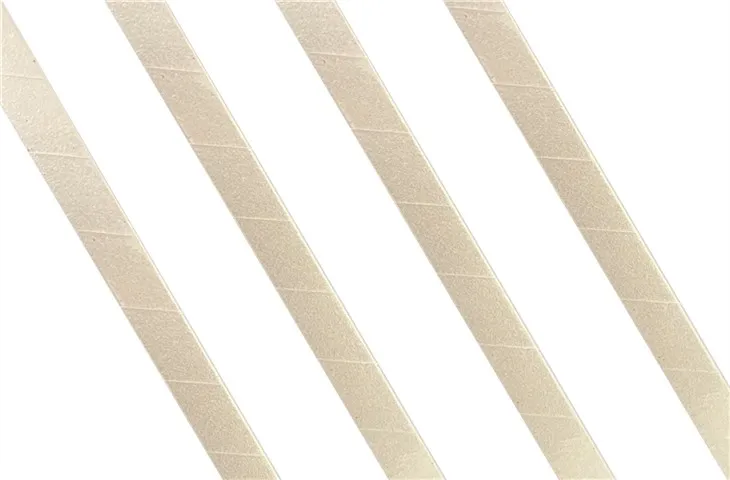

The frequency of the signal also has a significant impact on attenuation. At lower frequencies, the signal attenuation in paper wrapped wiring is generally relatively low. But as the frequency increases, the attenuation can rise quite rapidly. This is because at higher frequencies, the skin effect becomes more pronounced. The skin effect causes the current to flow more on the outer surface of the wire, and the interaction between the signal and the paper wrapping becomes more complex, leading to greater energy loss.
Now, let's compare paper wrapped wiring with other types of wrapped wiring. For example, Polyimide And F46 Film Wrapped Copper Wire often has different signal - attenuation characteristics. These film - wrapped wires are designed to have very low dielectric constants and excellent insulation properties. In many cases, they can offer lower signal attenuation, especially at higher frequencies, compared to paper wrapped wiring. However, paper wrapped wiring has its own advantages, such as being more cost - effective and having better mechanical flexibility in some applications.
Paper Wrapped Wire is widely used in various industries. In power transformers, for example, it's used to wind the coils. The signal attenuation properties need to be carefully considered here because any significant loss of signal can reduce the efficiency of the transformer. In telecommunications, although it might not be as commonly used as in power applications, paper wrapped wiring can still be found in some older systems or in specific niche applications where its unique properties are beneficial.
Film Wrapped Wire is another alternative. Film - wrapped wires are often used in high - frequency applications due to their low attenuation characteristics. But again, paper wrapped wiring has its place. It can be a great choice for applications where the frequency is relatively low and cost is a major concern.
As a supplier of paper wrapped wiring, I've seen firsthand how different customers have different requirements when it comes to signal attenuation. Some customers are willing to sacrifice a bit of signal quality for a more cost - effective solution, while others need extremely low attenuation for high - precision applications. That's why we offer a range of paper wrapped wiring products with different paper types, thicknesses, and wire gauges to meet these diverse needs.
If you're in the market for paper wrapped wiring, it's important to understand your specific application requirements. Consider the frequency of the signal, the environment in which the wiring will be used, and your budget. We can work with you to find the best paper wrapped wiring solution for your needs. Whether you need a wiring solution for a small - scale project or a large - scale industrial application, we've got you covered.
We have a team of experts who can help you analyze your signal - attenuation requirements and recommend the most suitable paper wrapped wiring product. We also offer custom - made solutions if our standard products don't exactly meet your needs.
So, if you're interested in learning more about our paper wrapped wiring products or want to discuss your specific requirements, don't hesitate to reach out. We're here to help you make the right choice for your project. Whether you're a manufacturer, an engineer, or someone involved in a DIY project, we can provide you with the high - quality paper wrapped wiring you need.
Let's work together to find the perfect paper wrapped wiring solution for your signal - transmission needs. Contact us today to start the conversation!
References
- "Electrical Wiring Handbook" by McGraw - Hill
- "Fundamentals of Signal Transmission" by John Wiley & Sons