

Hey there! As a supplier of multiple strand wire, I often get asked about the cost difference between multiple strand wire and single strand wire. It's a question that's crucial for anyone looking to make an informed decision when it comes to their wiring needs. So, let's dive right in and break down the costs, advantages, and disadvantages of each.
First off, let's talk about what single strand wire is. It's exactly what it sounds like - a single, solid conductor. This type of wire is commonly used in applications where flexibility isn't a big concern, like in building wiring or fixed electrical installations. Single strand wire is usually cheaper to manufacture because it requires less material and a simpler production process. You're basically just dealing with one solid piece of metal, whether it's copper or aluminum.
On the flip side, multiple strand wire is made up of several smaller strands of wire twisted or braided together. This design gives it some major advantages, especially in terms of flexibility. It's much easier to bend and shape multiple strand wire, which makes it ideal for applications where the wire needs to move or flex, like in robotics, automotive wiring, or electronic devices. But this flexibility comes at a cost.
The production of multiple strand wire is more complex. You've got to manufacture all those individual strands and then twist or braid them together. This process requires more labor and specialized equipment, which drives up the cost. Additionally, multiple strand wire often uses more material overall because of the space between the strands. So, from a manufacturing perspective, it's no surprise that multiple strand wire is generally more expensive than single strand wire.
But the cost difference isn't just about manufacturing. There are other factors at play too. One of the big ones is performance. Multiple strand wire has better conductivity in high - frequency applications. The individual strands reduce the skin effect, which is when the current tends to flow on the surface of the conductor at high frequencies. This means that for applications where high - frequency performance is critical, like in radio frequency (RF) circuits or high - speed data transmission, multiple strand wire can offer better performance. And that better performance can justify the higher cost.
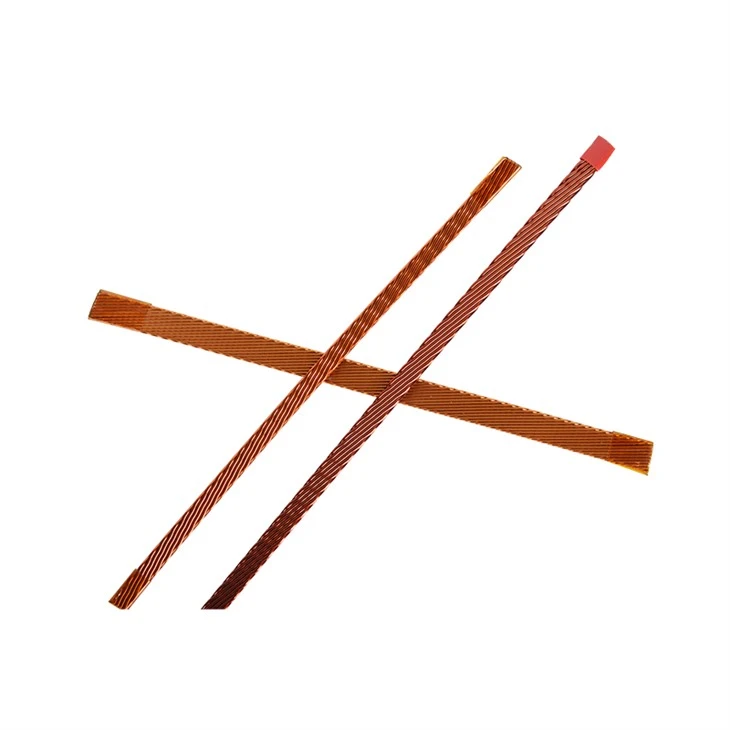
Let's take a look at some specific types of multiple strand wire. We've got Flat Twisted Cable. This type of cable is great for applications where you need a compact and flexible solution. The flat design allows for easy installation in tight spaces, and the twisting helps to reduce electromagnetic interference (EMI). However, the process of creating the flat and twisted structure adds to the cost compared to single strand wire.
Another type is Rectangular Insulated Aluminum Stranded Cable. Aluminum is generally cheaper than copper, but the stranded design still makes it more expensive than a single strand aluminum wire. The rectangular shape and insulation are designed for specific applications, like in power distribution systems where space is limited and protection from the environment is needed.
Then there's Flat Litz Wire. Litz wire is specifically designed to minimize the skin effect and proximity effect in high - frequency applications. It's made up of many individually insulated strands, which are carefully arranged and twisted. This complex design makes it one of the more expensive types of multiple strand wire, but it's worth it for applications where high - frequency performance is a must, like in inductors for high - frequency power supplies.
When it comes to durability, multiple strand wire also has an edge. The multiple strands distribute stress more evenly, which means it's less likely to break under repeated bending or vibration. In applications where the wire is subject to a lot of movement or stress, like in a moving machinery part, multiple strand wire can last longer. This longer lifespan can offset the initial higher cost over time.
On the other hand, single strand wire is more brittle. If it's bent too sharply or too many times, it can break. This lack of durability can lead to more frequent replacements, which can add up in the long run. So, even though single strand wire is cheaper upfront, the total cost of ownership might not be as low as you'd think in some applications.
In terms of installation, multiple strand wire is often easier to work with. Its flexibility allows for quick and easy routing, especially in complex systems. You can bend it around corners and through tight spaces without much hassle. Single strand wire, while easier to strip and terminate in some cases, can be a pain to install in applications where it needs to follow a complex path. The labor cost associated with installing single strand wire in a difficult environment can be significant, and this can narrow the cost gap between the two types of wire.
So, how do you decide which one to choose? It really depends on your specific application. If you're working on a simple, fixed - wiring project where cost is the main concern and flexibility isn't an issue, single strand wire might be the way to go. But if you need a wire that can handle movement, has better high - frequency performance, or will last longer in a harsh environment, then multiple strand wire is worth the extra investment.
As a multiple strand wire supplier, I've seen firsthand how different applications have different needs. I'm here to help you figure out which type of wire is best for your project. Whether you're a small electronics hobbyist or a large - scale industrial manufacturer, I can provide you with high - quality multiple strand wire that meets your requirements.

If you're interested in learning more about our multiple strand wire products or want to discuss a specific project, I'd love to hear from you. Reach out to start a conversation about your wiring needs, and we can work together to find the best solution for you.
References
- Grover, F. W. (1946). Inductance Calculations: Working Formulas and Tables. Dover Publications.
- Paul, C. R. (2007). Analysis of Multiconductor Transmission Lines. John Wiley & Sons.